
Integrating Mindfulness into a Unified Life
By Abhishek Maheshwari
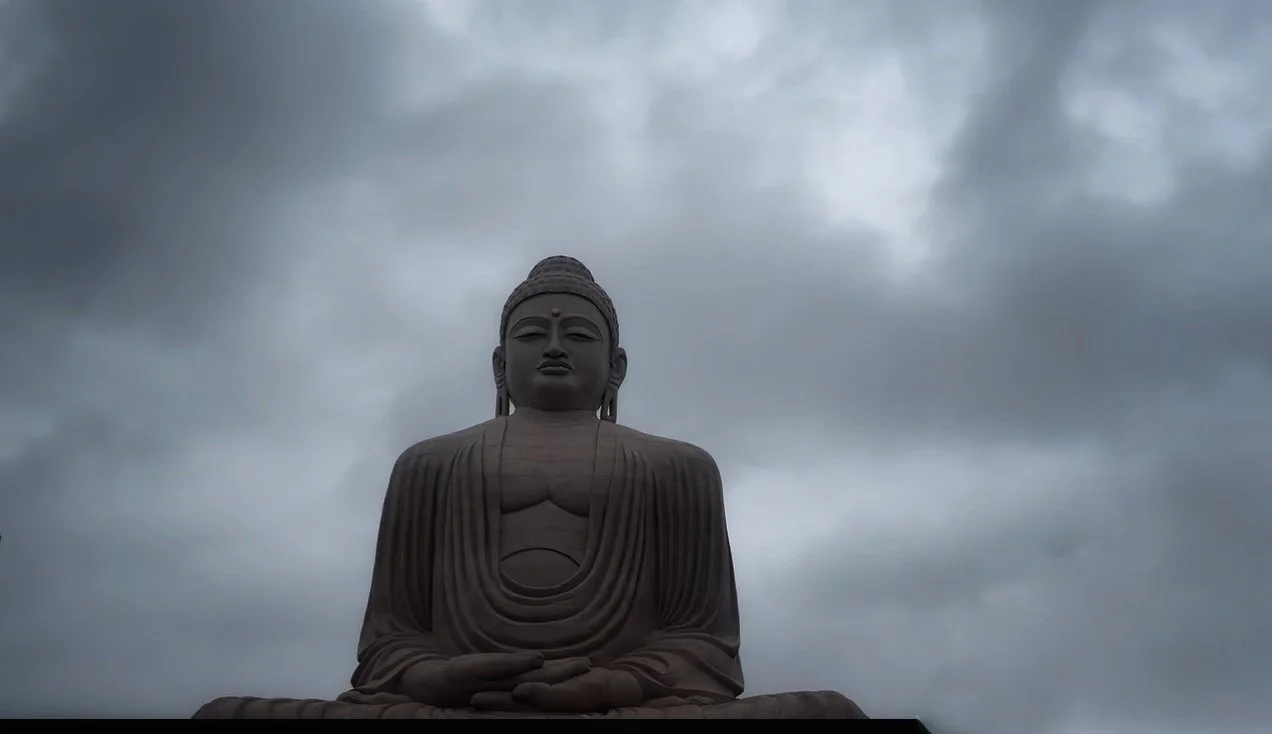
I’m writing this from a truly special place—the meditation hall of a Temple in Bodh Gaya, right next to the 80-foot Buddha statue. In this absolute silence, I want to share a few thoughts on mindfulness and the necessity of fully integrating it into our daily existence.
————————————————————-
Dissolving the Silos of Life
The first thought that strikes me when considering spiritual practice is the human tendency to segregate life. We compartmentalize into silos: "work and life," "worldly matters," and "spiritual matters." This segregation creates a fundamental distortion.
If work is seen as separate from "life," it implies that when we are working, we are somehow not living. Similarly, isolating "spiritual life" makes it feel like an add-on, leaving us with very little time for genuine reflection. Spirituality is an intense pursuit; it demands time. By fracturing our existence, we limit the opportunity to truly refine our understanding of what it means to be spiritual.
The core essence of a spiritual endeavor must be to see the entire experience as one single whole. Our ethos, our behavior, and our core attitude should remain the same whether we are in a high-stakes meeting or sitting down to meditate. The true spiritual life is when the essence of who you are does not change based on external circumstances.
Awareness: The Core of the Spiritual Life
If we look at the origin of the word spiritual, it comes from spiritus, which is linked to the word breath. To be spiritual, therefore, is to live with awareness of the breath—the source of movement in our lives—and to be aware of experiences beyond the purely mechanical.
This state of awareness is established in three progressive layers:
Basic Awareness: This is being mindful of your daily activities and sensory perceptions. It's about how you walk, how you listen, and how you engage with your five senses. This is the foundational layer of conscious living.
Value Alignment: Here, you become aware of your core values (e.g., integrity, kindness) and then observe your actions. The goal is to close the gap between what you value and how you behave—to ensure your actions truly represent your values.
Universal Awareness: This is the deepest layer, relating to the larger structure of the universe. It means being aware of the fundamental principles of impermanence and interconnectedness. To be truly spiritual is to behave in a manner that honors these universal values.
Concentration vs. Mindfulness
It's crucial to distinguish between two related mental states:
Concentration (Hard Focus) | Single-pointed attention on one object (e.g., a candle, a sound), requiring strong willpower to exclude everything else. | Used initially in meditation to achieve steadiness of mind (like learning to drive).
Mindfulness (Relaxed Awareness) | Expansive awareness of multiple things simultaneously (breath, thoughts, body), done effortlessly. | Once the mind is steady, this leads to insight and creativity (like driving automatically).
The path of meditation begins with Concentration, moves to Mindfulness, and culminates in Wisdom—an intense clarity achieved with total lack of effort, known in Yogic philosophy as Hert Samadhi (Samadhi).
Mindfulness as Non-Judgmental Observation
Mindfulness is not a technique; it is a quality of consciousness. Its defining feature is non-judgmental observation.
When you are mindful of your thoughts, you are looking at them as if in a mirror: you see them, but you cannot edit them. If you are angry, you are aware that you are angry; if you are distracted, you are aware that you are distracted. You are simply aware of your current state without coloring, manipulating, or judging it.
The utility of this is profound. Awareness prevents us from living in total ignorance. Even if we act against our better judgment, the awareness allows us to see the cost we pay in mental tranquility. This understanding gives us the courage and the willpower to change our behavior the next time, moving us closer to that state where our actions and values truly match up.
The Wisdom of Impermanence
When we reach the deepest layer of mindfulness, we gain the wisdom to see the world through the prism of impermanence. Everything—your mood, your material wealth, your relationships, your health—is subject to change.
Suffering or deep dissatisfaction (Dukkha) arises precisely because we try to contradict this universal law by demanding guarantees and permanence. When we seek to hold onto experiences we like or avoid those we dislike, we set ourselves up for agitation.
Understanding impermanence provides mental adaptability. You know the emotions you are experiencing right now will not last, and the situation you face will not last. Once you gain this wisdom, you stop prioritizing pettiness and start dedicating your energy to things that truly matter, living a simplified and genuinely spiritual life.