
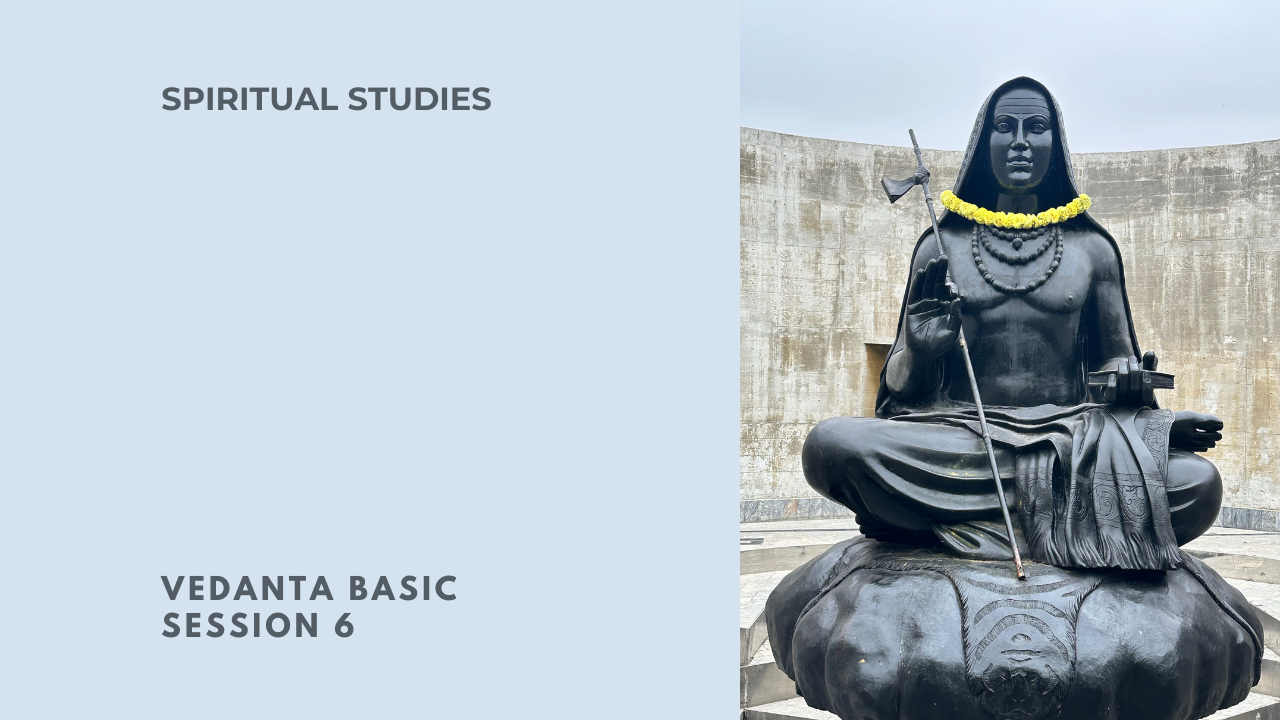
"Who do you take yourself to be?"
From our recent spiritual studies session on the anatomy of the Jiva
The Question That Changes Everything
"Who do you take yourself to be?"
This isn't just another philosophical question to ponder over chai. It's the central inquiry of Vedantic philosophy, and your answer to it reveals everything about how you experience life, suffering, and reality itself.
In our recent session, we explored this profound question through the lens of Vedantic anatomy—a systematic way of understanding the self that goes far beyond the physical body. Let me take you through this journey from gross to subtle, from the obvious to the mysterious.
Why This Matters: The Problem of Suffering
Before diving into the anatomy, let's be clear about why we're doing this. Vedanta, like all Indian philosophical traditions, addresses one fundamental human concern: suffering.
Not just the temporary discomfort of a bad day or a failed project, but the essential dissatisfaction that permeates human existence. No matter what we achieve, no matter how successful we become, there's always something missing—a quiet undercurrent of "is this it?"
According to Vedanta, this suffering arises from misidentification. We've boxed ourselves into limited identities when our true nature is limitless. We think we're just this body, these emotions, these thoughts—when actually, we are pure consciousness itself. The entire Vedantic journey is about recognizing this truth.
And notice the word I used: recognizing, not discovering. This is crucial. Vedanta is not about becoming something new or achieving some special state. It's about recognizing what you already are and always have been.
Two Ways of Looking at Yourself
The Vedantic anatomy gives us two complementary models to understand the self:
Sharira Traya (Three Bodies) - The structural model
Pancha Kosha (Five Sheaths) - The experiential model
Think of the structural model as the architecture of your being, and the experiential model as how you actually live in that architecture.
The Three Bodies (Sharira Traya)
The structural model divides our being into three layers:
Sthula Sharira (Gross Body) - Your physical body and senses
Sukshma Sharira (Subtle Body) - Your mind, intellect, ego, and vital energy
Karana Sharira (Causal Body) - The repository of all your karmic imprints and deep-seated tendencies
These aren't separate entities but interpenetrating layers of your existence, like concentric circles rather than stacked floors.
The Five Sheaths (Pancha Kosha)
Now, the experiential model—this is where things get really practical and interesting. The five koshas map onto the three bodies and describe how we actually experience life at different levels:
1. Annamaya Kosha (Food Sheath)
This is your relationship with the physical body and senses. When you're constantly thinking about food, obsessing over how you look, or completely driven by sensory pleasures, you're operating primarily from this layer.
Daily Life Signs: Your entire focus is on physical comfort, appearance, sensory gratification. Every decision is filtered through "what will feel good to my body?"
2. Pranamaya Kosha (Energy Sheath)
This is the layer of vital energy. When you say "the energy didn't match" with someone, or "I'm feeling low on energy today," you're referencing this kosha.
Daily Life Signs: You're ruled by your energy levels. High energy days versus low energy days completely determine your mood and capability. Anxiety and restlessness dominate here too.
Practical Application: This is why pranayama (breath control) is so powerful—it directly works with this layer to stabilize your energy and, consequently, your mental state.
3. Manomaya Kosha (Mental/Emotional Sheath)
Your thoughts, emotions, memories, likes and dislikes—they all originate here. This is where most people spend most of their lives, trapped in emotional reactivity and overthinking.
Daily Life Signs: Mood swings, emotional reactivity, constantly building stories in your mind about what might happen or what people might think. Living in the past (memories) or future (anxieties) rather than the present.
4. Vijnanamaya Kosha (Wisdom Sheath)
This is where discrimination, ethical sense, and true intelligence reside. When you can pause before reacting, weigh your words carefully, and make wise decisions, you're operating from this layer.
Critical Point: This is where viveka (discrimination) lives—the primary prerequisite for Vedantic study. If you're stuck in the body, energy, or emotions, your inquiry will only be about ending temporary discomforts. But when you operate from vijnanamaya kosha, you can ask: "How do I end suffering itself, even while accepting that I'll have pain, emotions, and challenges?"
5. Anandamaya Kosha (Bliss Sheath)
The deepest layer before pure consciousness. This is where deep contentment resides, but also where the most subtle karmic patterns are stored. It's your natural disposition, your core personality blueprint.
When you can align your life with your most authentic self—beyond social conditioning, beyond reactivity, beyond the compulsions of body and mind—you experience the quiet happiness of this layer.
The Subtle Body Breakdown: Manas, Ahamkara, Buddhi, Chitta
Within the subtle body, Vedanta identifies four key functions that are crucial to understand:
Manas (Mind): Where likes and dislikes arise. Your friend's friend is sick? You feel a little bad. Your friend is sick? You're disturbed. Why? Because of the next component...
Ahamkara (Ego/Identity): This is what contextualizes your experience. It's the "I-ness" that determines how much you feel something based on how identified you are with it. The degree of pain or joy you experience is directly proportional to how much ego/identity you've invested.
Buddhi (Intellect): Your discriminative faculty. This is what can step back and say, "Everything is impermanent. This illness will pass. Health was the former state, illness is the current state, wellness will return." Buddhi reduces the intensity of experience through discrimination.
Chitta (Pure Awareness): The witness that observes all of the above. The awareness that knows you had a like or dislike, that notices your identification, that watches even your discrimination at work.
Patanjali's Yoga Sutras define yoga as "Yogah chitta vritti nirodhah"—yoga is the stilling of the modifications of chitta. This is how subtle the work is. Even when you've transcended body, energy, and emotions, even when your intellect is sharp—there are still subtle ripples in chitta, karmic patterns that need to be dissolved.
Where You Live Determines What You See
Here's the practical magic of understanding these koshas: where you predominantly operate from determines the questions you ask and the problems you try to solve.
Someone stuck in annamaya kosha will spend their whole life trying to perfect their body or maximize sensory pleasure. Someone in pranamaya kosha will be obsessed with energy management, trying different practices to feel "balanced." Someone in manomaya kosha will be constantly working on emotional healing, processing feelings endlessly.
But someone operating from vijnanamaya kosha asks a different question entirely: "How do I end suffering itself, regardless of what happens to my body, energy, or emotions?"
A Few Important Clarifications
Do These Koshas Overlap?
Absolutely. Think of them as concentric, not layered. What happens in one affects all the others.
Eat a heavy lunch? That's annamaya kosha. But watch how it affects your energy (pranamaya), makes you dull and bored (manomaya), and clouds your thinking (vijnanamaya). Similarly, anxiety (pranamaya) can manifest as physical pain (annamaya). This is why pain is increasingly understood as psychosomatic.
Do You Need to Know All This to Be Happy?
No. And this is crucial.
Mirabai knew nothing of the koshas or the three bodies, but her pure devotion to Krishna took her to the same ultimate realization that a Vedantic scholar reaches. A dog is happy without this knowledge. The Buddha's framework was different. Jainism has its own system.
So why study this? Because if you're a person inclined toward self-inquiry—if you need context and structure to understand your experience—this framework is incredibly helpful.
As I said in our session: Pain plus identity equals suffering. Pain plus context equals information.
These structures give you context. They transform suffering into information you can work with.
Can Others See What Kosha You're In?
In gross, exaggerated forms—yes. If someone is completely body-obsessed or emotionally reactive, it's obvious. But the subtle distinctions? Only you can truly know through honest self-inquiry. Others can judge (rightly or wrongly), but what matters is whether you can see yourself clearly in the mirror.
The Practical Path Forward
Understanding this anatomy isn't academic. It's a tool for navigation.
In meditation, if you're constantly fidgety about your posture, you know you're stuck in body consciousness (annamaya kosha). As you practice, you learn to move beyond that.
If you can't focus because your breath is all over the place, you're working with pranamaya kosha. Regulate the breath through pranayama.
If you're lost in emotional stories, you're in manomaya kosha. Can you witness the emotions without becoming them?
The journey is from gross to subtle—from body to energy to emotions to intellect to the most subtle bliss sheath. And beyond even that lies pure consciousness, the Brahman, your true nature.
The Final Barrier: Anandamaya Kosha
This deserves special attention because it's where many seekers get stuck.
Anandamaya kosha is beautiful—it's peaceful, blissful, content. But it's still a sheath, still a limitation. This is where your deepest karmic patterns reside, your core personality imprints.
The final work is to go beyond even this subtle peace, this quiet happiness, to recognize yourself as the pure awareness that witnesses even the anandamaya kosha.
This is the fight Patanjali refers to—stilling even the most subtle movements of consciousness to recognize what you are beyond all sheaths, all bodies, all limitations.
Moving Forward: Jagat Mithya
In our next session, we'll explore Jagat—the world of experience itself. And we'll unpack a crucial Vedantic term: mithya.
Mithya doesn't mean false or unreal, as commonly misunderstood. It means dependently real. The world is not absolutely real in itself—its reality depends on something else (Brahman). Understanding this distinction is key to the entire Vedantic worldview.
But that's for next time.
A Closing Reflection
The question we started with—"Who do you take yourself to be?"—keeps unraveling as you progress on this path.
Right now, you might identify with your body, your feelings, your thoughts, your personality. And that's completely natural. The Vedantic journey doesn't judge this; it simply offers you tools to inquire deeper.
With each layer you understand and transcend, you get closer to recognizing your true nature: pure consciousness, limitless being, sat-chit-ananda (existence-consciousness-bliss).
You're not becoming this. You're recognizing what you already are.
And the thick wall of "I"—the ahamkara that seems so solid—can be navigated, understood, and ultimately transcended when you have the right maps. The koshas and shariras are those maps.
Take your time with this. Sit with these ideas. Observe yourself honestly. Where do you predominantly operate from? What drives your decisions? What causes your suffering?
The answers to these questions are not intellectual achievements—they're lived recognitions that unfold over time.
These are ongoing explorations from our spiritual studies sessions. Join us as we continue this journey from the limited to the limitless, from suffering to recognition, from ignorance to the light of self-knowledge.