
India carries a heavy share of the world’s type 2 diabetes cases, and it’s tempting to explain that with a single word — diet. But the fuller picture involves biology, lifestyle, and emotion, working together in a loop that’s worth understanding, because understanding it is what makes it possible to break.
Start with biology: research comparing how South Asians and Europeans store fat found a real difference. Europeans tend to create new fat cells to store excess energy; South Asians tend to expand the fat cells they already have — visceral fat, stored around the organs. That pattern makes us insulin resistant earlier than other populations, before there’s even a change in how someone looks.
Now layer on lifestyle: a lot of us eat 60–70% of our daily calories from carbohydrates, snack frequently on carbohydrate-rich food, sleep less than we should, and move less than we should. Each of these independently nudges the body toward insulin resistance.
And then there’s the part people rarely connect to diabetes at all: emotion. Continuous stress means that even a small dietary lapse has an outsized effect on your body, because stress is already disturbing your sleep and your food choices in the background. Stress raises cortisol. Rising cortisol increases insulin resistance. Poor sleep from stress disturbs your eating the next day. It’s a loop — stress affecting food, food affecting sleep, sleep affecting stress — and diabetes finds its opening through any point in that circle.
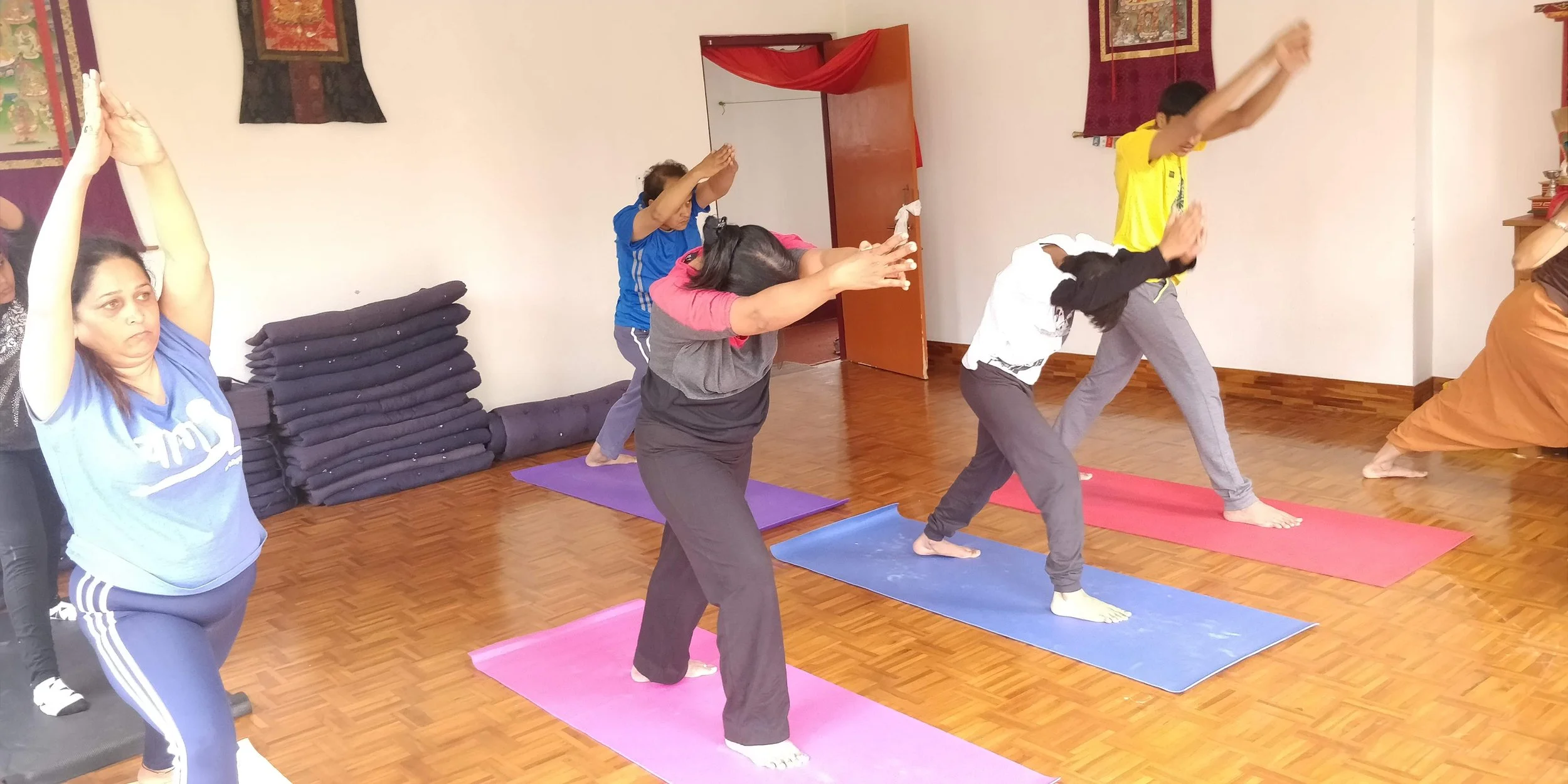
This is exactly where yoga’s role becomes clear, and it isn’t mystical — it’s mechanical. Certain postures support pancreatic and liver function directly. Meditation practice builds your capacity to handle stress before it spirals into cortisol overload. And breath regulation interrupts the short, shallow, stress-driven breathing pattern that keeps the whole cycle running.
If you’re managing your risk or your diagnosis, don’t only ask “what should I stop eating.” Ask what’s driving your stress, whether your sleep is being quietly sacrificed, and whether you have any practice — even a few minutes of regulated breath a day — that interrupts the loop before it interrupts you.
From the Wellness Wisdom lecture series at Mystic Yoga.
About the Author
Abhishek Maheshwari is a yoga teacher, author, and the Founder of Mystic Yoga. His work integrates Yoga, Meditation, Ayurvedic Nutrition, and Spiritual Philosophy to promote holistic health and well-being through classes, retreats, and corporate wellness programs.