
Most people trying to lose weight already know what to eat. They’ve read the articles, counted the calories, seen the charts. The knowledge is rarely the missing piece. What’s missing is something quieter: discipline, confidence, and a mind that isn’t constantly being pulled toward food by forces it doesn’t fully control.
Weight gain is rarely simple overeating from ignorance. It’s usually a cycle — overeating, low activity, stress eating, and a reward-seeking pattern where food becomes the fastest available way to feel better in a hard moment. And that cycle is self-reinforcing: being unhappy about your weight becomes one more source of stress, which feeds the same eating pattern that caused the unhappiness in the first place.
There’s also a physical layer most people aren’t told about: hunger hormones can be trained. A diet high in carbohydrates and sugar creates energy crashes, and those crashes generate real, physical hunger signals — not weakness, not lack of willpower, an actual hormonal response asking to be fed again, soon.
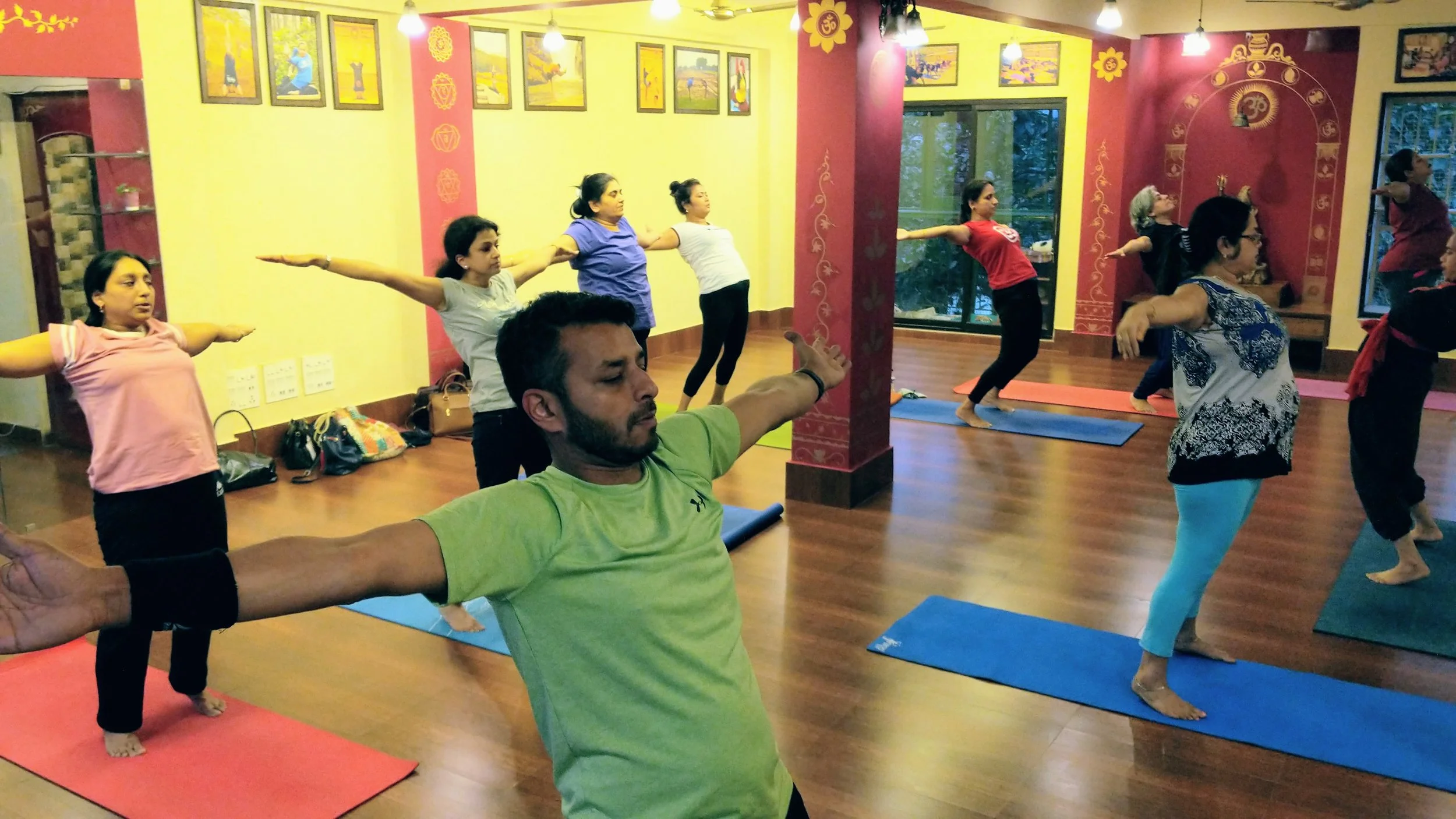
So if the problem isn’t only knowledge, willpower alone won’t solve it either — you’re fighting a trained hormonal system with sheer determination, which is an exhausting and unreliable strategy. This is where yoga’s contribution is different from what people expect. It’s not primarily about burning calories. Its value is in building discipline and confidence through consistent practice, and in cultivating mindful eating — genuinely tasting and noticing your food rather than consuming it on autopilot or under stress.
There’s a specific mechanism worth knowing about: yogic breathwork, or pranayama, is a doorway into what the tradition calls pratyahara — drawing your senses and attention inward, away from constant external stimulation. Practiced consistently, this reduces how reactive you are to food triggers around you: the smell, the advertisement, the plate someone else is eating from.
So if you’re trying to lose weight, don’t just change your plate. Build a practice that quiets the reward-seeking loop itself — a few minutes of regulated breathing before a meal, or before you reach for the thing you reach or under stress, is a small, realistic place to start.
From the Wellness Wisdom lecture series at Mystic Yoga.
About the Author
Abhishek Maheshwari is a yoga teacher, author, and the Founder of Mystic Yoga. His work integrates Yoga, Meditation, Ayurvedic Nutrition, and Spiritual Philosophy to promote holistic health and well-being through classes, retreats, and corporate wellness programs.